Why Your Hook Is Killing Your Videos (And How to Fix It)
If people swipe in the first second, your idea is not always the issue. The opening is. A weak hook can kill a good video before it even starts.

In short-form content, the first second is the audition. Viewers decide fast. Their decision is usually based on what they see first, not what your overarching topic is.
The Economics of the First Second
Every video platform today operates on an algorithmic sorting mechanism that heavily weights early retention. When a user scrolls into your video, a microscopic transaction takes place. You are asking for their time; they are demanding immediate proof that your video is worth it. This transaction happens in under 1.5 seconds.
Many creators spend ninety percent of their production time writing the core script, setting up the lighting, and editing the body of the video. They treat the hook as an afterthought—a quick introductory sentence. This is mathematically backwards.
If the hook fails
Most videos do not get a second chance after a weak opening. Early swipes send a catastrophic signal to the algorithm, and distribution cools down quickly. Even if the middle of your video is a masterpiece, nobody will ever see it.
Hook quality is not just a creative preference. It changes the fundamental economics of your channel. If your 0-to-3 second drop-off is high, you are leaking performance at the very top of the funnel. Fixing the hook is the highest-leverage activity you can undertake in video production.
Rule 1: Open With Something Happening
The most common mistake creators make is starting at state zero. They begin with a static shot, a deep breath, or a verbal greeting like 'Hey guys, welcome back.' In the feed, static is synonymous with boring. By the time you finish saying 'hello', the viewer has already swiped twice.
You must start in medias res—in the middle of the action. Skip the setup. Start with motion, tension, or a visible, pressing problem. The visual plane needs to be active from frame one. If you are building something, show the sparks flying on the first frame, not the raw materials sitting on a desk.
Action does not necessarily mean explosions or frantic movement. It can be a sudden text pop-up, a dramatic zoom, a physical gesture, or an object being dropped. It just means the frame cannot look like a still photograph. The viewer's eye needs something to track immediately.
Rule 2: Break the Pattern Fast
Feeds are massive rivers of familiar patterns. People scroll in a semi-trance state. Your opening has to interrupt that pattern fast. A weird camera angle, a broken UI element, a visual contradiction, or surprising scale. Anything intentional that makes the brain stall for a fraction of a second to compute what it is looking at.
However, random chaos is not a hook. Screaming at the camera or using aggressive flashing lights might interrupt the pattern, but it causes algorithmic fatigue and repels viewers. The interruption must feel deliberate and relevant to the payoff. It should be confusing for exactly one beat, and then clear the next.
Pattern interrupts work best when they subvert an established format. If everyone in your niche films sitting at a desk, film from the floor looking up. If everyone uses high-energy music, use absolute dead silence for the first three seconds. Contrast is your greatest weapon in a crowded feed.
Rule 3: Make It Instantly Understandable
Great hooks do two contradictory jobs at the exact same time: they provide surprise, and they provide clarity. If your hook is too abstract, viewers feel stupid and leave. If it is too normal, they get bored and keep scrolling.
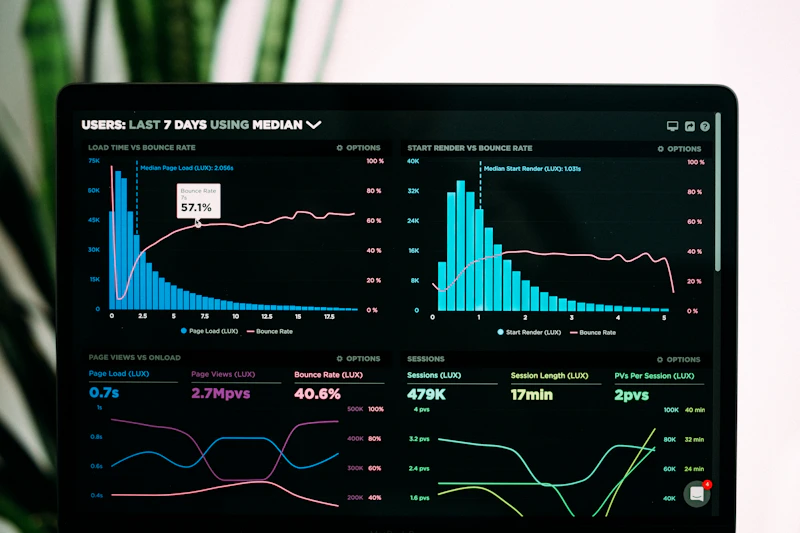
The easiest way to achieve this balance is to anchor your hook in familiar objects. A dashboard, a web browser, a chart, a familiar tool. Start with something the viewer instantly recognizes, and then twist one single detail so it feels profoundly wrong and worth sticking around to understand.
The hook formula in one sentence
Familiar base + Surprising condition = Strong hook. Often, that simple equation is enough to hold a viewer.
For example, showing a pristine luxury car (familiar) covered entirely in mud (surprising condition). Or showing a standard spreadsheet (familiar) where every cell is rendering an error (surprising condition). The brain recognizes the object instantly, but needs the video to explain the anomaly.
The Framework for Hook Testing
You cannot guess your way to perfect hooks. You have to test them. Professional creators treat hooks as modular components. They will often film three different hooks for the exact same core video and test them to see which one retains the audience past the critical three-second mark.
Hook A: The Negative Frame (Focus on the pain/mistake)
Hook B: The Desired Outcome (Focus on the final result/payoff)
Hook C: The Curiosity Gap (Focus on an anomaly or weird fact)

Process:
1. Publish Hook A. Monitor 0-3s retention after 10k views.
2. If retention is < 60%, unlist or delete.
3. Re-upload with Hook B. Compare metrics.
4. Document the winning structure in your library.
Over time, this testing protocol removes the emotion from your production process. You stop being attached to your clever intros and start respecting the data. The hook is the gatekeeper. If frame one fails, the rest might as well not exist. If frame one works, you have finally earned the right to build trust.